
Infection Control & Radiator Covers: Design Features Estates Teams Actually Want
Infection Control & Radiator Covers: Design Features Estates Teams Actually Want
In healthcare and care environments, radiator covers aren’t just about looks — they need to support cleaning, reduce dust traps,
minimise maintenance disruption and stay robust under daily use.
Below are the practical features estates and facilities teams typically look for when specifying radiator covers for wards, corridors,
clinics, waiting areas and residential care settings.
Estates / Facilities Teams
Contractors & Refurb Programmes
A cover that’s easy to clean, easy to maintain, and built to last — without creating new hygiene headaches.
Manufacturer-led survey to confirm sizes, access needs and site constraints before manufacture (free survey available).
1) Easy wipe-down surfaces (and fewer dust traps)
Infection control teams typically prefer straightforward surfaces that can be wiped quickly and consistently.
Complicated profiles and awkward crevices can become dust traps — especially in high-traffic areas.
- Smooth, durable finishes suitable for regular cleaning routines
- Clean detailing that avoids unnecessary ledges and hard-to-reach gaps
- Robust construction that stays square and tidy after repeated cleaning
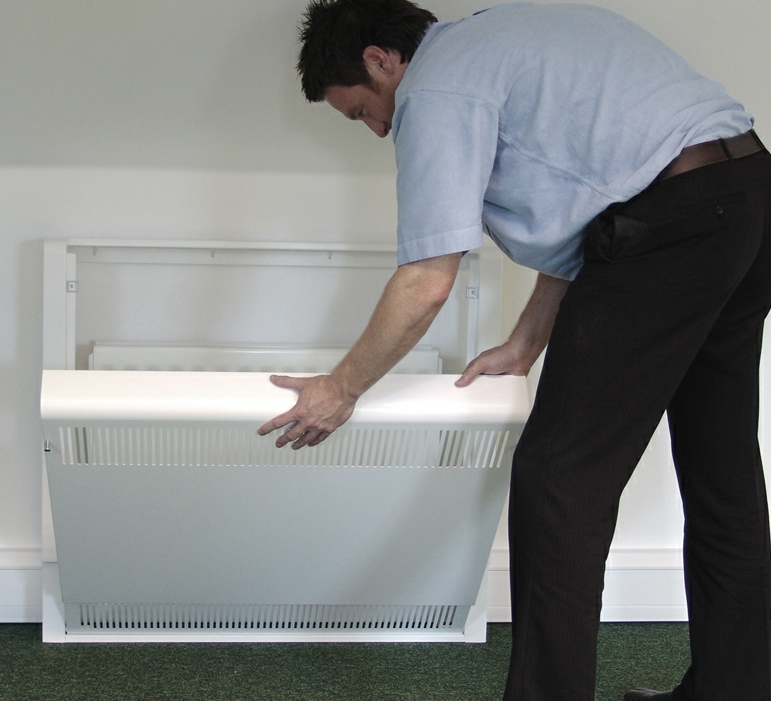
2) Maintenance access that doesn’t disrupt the ward
Estates teams care about what happens six months later: TRV adjustment, bleeding, valve replacement and routine checks.
If access is awkward, the cover becomes a frustration — and corners get cut.
- Specify whether the cover must be removable, hinged or include service access
- Confirm whether TRVs must remain adjustable without removing the cover
- Consider access-first solutions where maintenance is frequent
Eazi-Access for quick servicing access ·
Standard Steel for general robust installations
3) Airflow and practical performance (don’t let covers sit tight)
Good airflow helps maintain practical heat performance and reduces the risk of covers being fitted too close to radiators.
As typical clearance guidance, allow:
- 100mm ideal above the radiator (50mm minimum if needed)
- 100mm each side where practicable
- 50mm clearance from the front of the radiator
4) Robustness in real environments
Hospital corridors, bays and care environments can be tough: beds, wheelchairs, trolleys, hoists and daily knocks.
A “light domestic” solution rarely survives long.
Specify robust construction suited to the location (corridors and high-traffic areas need more resilience).
Powder coating to specified RAL helps keep a consistent appearance across refurbishment programmes.
5) Secure areas: be clear about the requirement
In mental health and secure environments, “anti-ligature” needs to be specified clearly. Define the tamper resistance intent
and the required access method for servicing.
- Environment: ward type and risk profile
- Tamper resistance intent: robust / secure / high tamper resistance
- Controlled access: authorised access only, if required
Anti-Ligature Secure+ (Eazi-Access Secure).
6) What to put in your tender notes (copy/paste)
Use the below as a starting point — then tailor for your building and environment.
Sizes recorded as H × W × D (mm). Covers to allow suitable airflow and practical servicing access to valves/TRVs as required.
Finish: powder coated to RAL ___. Fixings and access strategy to suit wall type, environment and maintenance needs.
Where secure environments apply, specify higher-security solution such as Anti-Ligature Secure+ where required.
Want help choosing the right cover type for your environment?
Send your schedule (or drawings) and we’ll advise the best range and access method — and we can carry out a
free site survey to confirm sizes before manufacture.