
Moisture resistance · Coverad product range
Polymer LST radiator covers
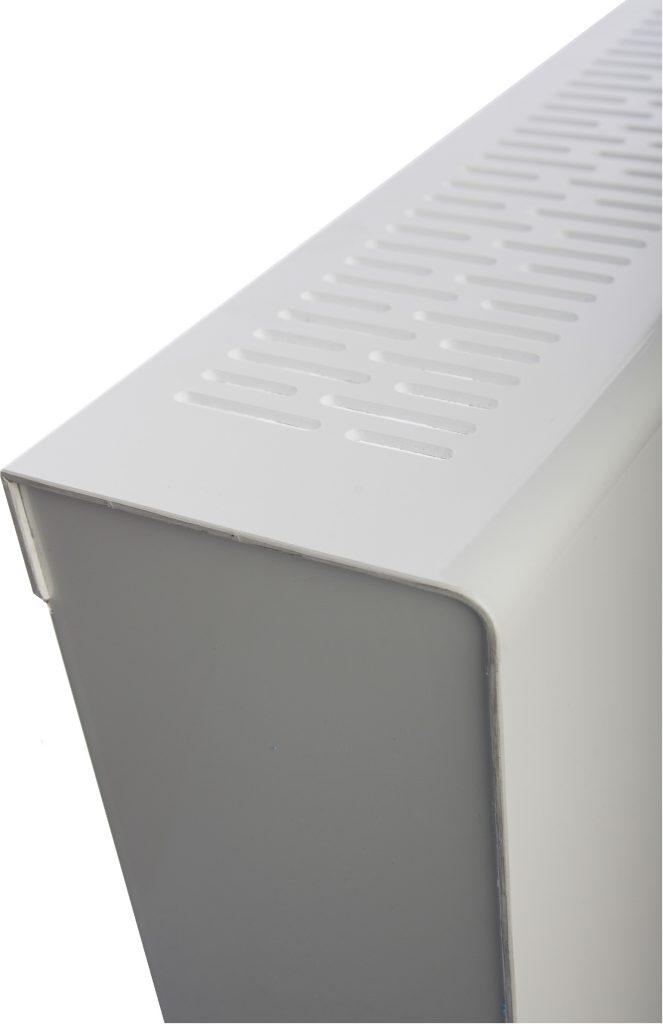
A cleanable, rust-proof uPVC radiator-cover system for wet areas and environments where corrosion resistance and a softer impact surface matter.
Wet areas · healthcare · education · housing
Wet areas · healthcare · education · housing
Impact-resistant, rust-proof protection.
Polymer is the specialist route for environments where corrosion resistance, cleanability and a softer impact surface matter more than a traditional steel construction.
At a glance
The selection points teams ask for first.
A concise starting point before the full specification, current datasheet and project drawings are confirmed.
Stated classification
A 4.5 mm self-finished material system; confirm current evidence.
Rust proof
Well suited to wet, humid and corrosive environments.
Radius edge
A softer front-edge treatment for occupied spaces.
Ventilation options
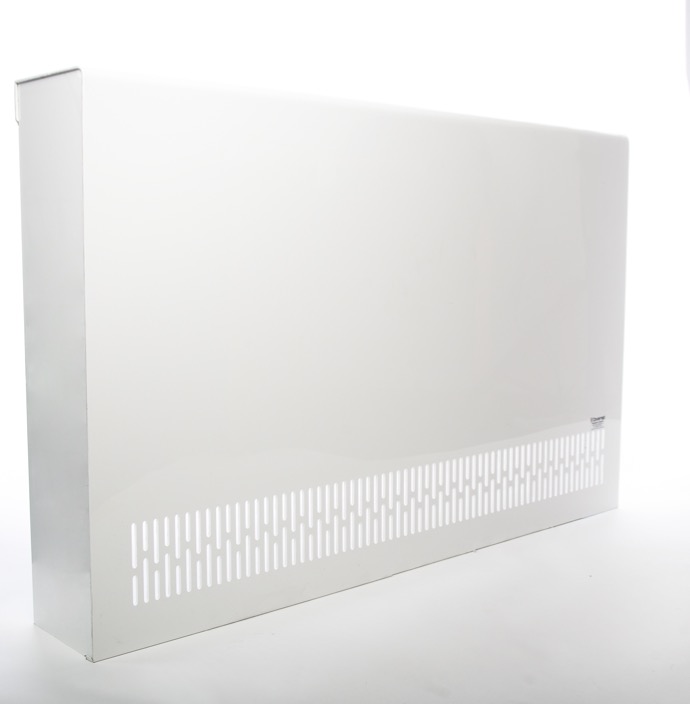
Slotted or fine-perforation configurations.
Why this range exists
Proven in wet and high-traffic settings.
The 4.5 mm uPVC system is self-finished, rust proof and available with slotted or fine-perforation ventilation. Current product information states a fire classification; confirm the evidence required for the project.
- 01
Choose the configuration
Confirm floor- or wall-mounting and flat or sloping top.
- 02
Set ventilation
Select slotted or 2 mm perforation according to the project.
- 03
Confirm access
Plan valve access, cut-outs and maintenance requirements.
- 04
Verify the substrate
Agree fixings and optional battens for the site conditions.
Product and project gallery
Polymer in detail.
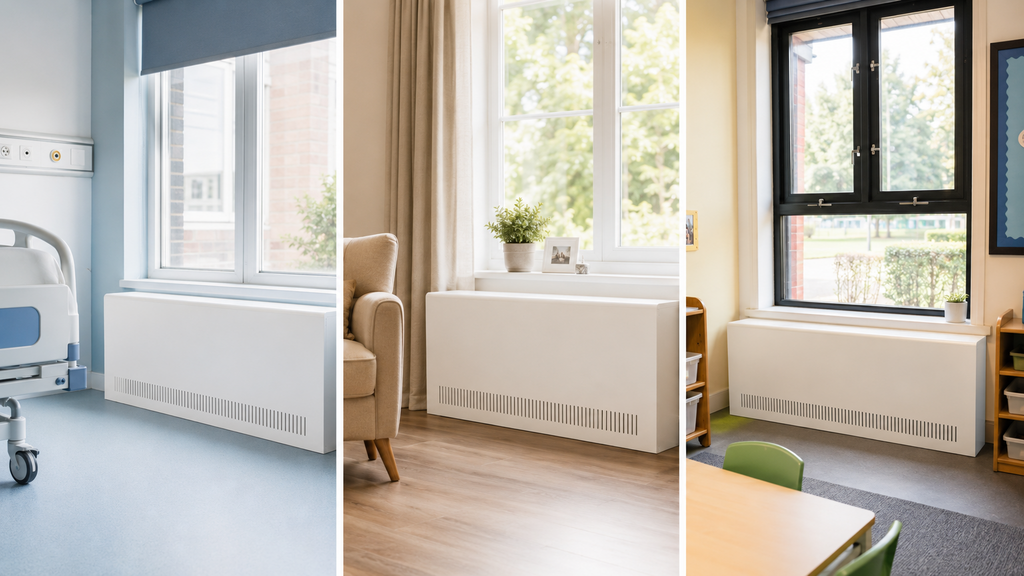
Product details and real-world installation views across healthcare, education and public-building environments.
Compare ranges
Is Polymer the right route?
Compare the closest alternatives by environment and access need, then ask Coverad to confirm the project-specific choice.
Polymer
Wet areas and corrosion resistance
- uPVC with stated fire classification
- Rust proof
- Softer impact surface
Standard Steel
Durable everyday LST protection
- Made to measure
- Powder-coated steel
- Floor or wall mounted
Eazi-Access
Regular cleaning and servicing
- LST protection
- Half Turn Allen Key Fixing
- Healthcare-friendly detailing
Pipe Boxing
Wet areas, corridors and service runs
- Moisture resistant
- No painting
- Standard and bespoke profiles
Verified specification route
Polymer on NBS Source.
Confirm the verified product listing, then open the live specification tools only when they are needed.
Specification
Polymer LST radiator covers — key details.
Use this as a quick reference for schedules and tenders. Confirm the current datasheet, drawings, finish, access and fixing details before specification or order.
Selection and specification
Choosing uPVC radiator covers for wet areas
Polymer provides a rust-proof uPVC alternative where moisture is a key material-selection concern. Consider cleaning methods, impact exposure, mounting conditions and access requirements as well as appearance when comparing it with a steel cover.
Class 1 and B-s3,d2 come from different classification systems. Treat the wording in product literature as a starting point and obtain the applicable classification report rather than assuming the terms are interchangeable.
Supporting information: Read the Polymer datasheet. Ask Coverad about your specification.
Check the environment and material evidence
- Describe moisture exposure and the cleaning agents used in the room.
- Confirm the proposed mounting arrangement and any pipe or valve cut-outs.
- Request the current fire-classification evidence and check that it applies to the proposed product and installation.
Request a site survey if you need help recording site conditions.
Guidance and project proof
Polymer guidance and insights.
Relevant specification guidance and live Coverad project stories from the Coverad insights library.
24/06/2026
Low Surface Temperature Radiator Covers: UK Guidance for Hospitals, Care Homes and Schools
A guide to low surface temperature radiator covers for hospitals, care homes and schools, covering hot-surface risk, access, surveys and specification.
Read more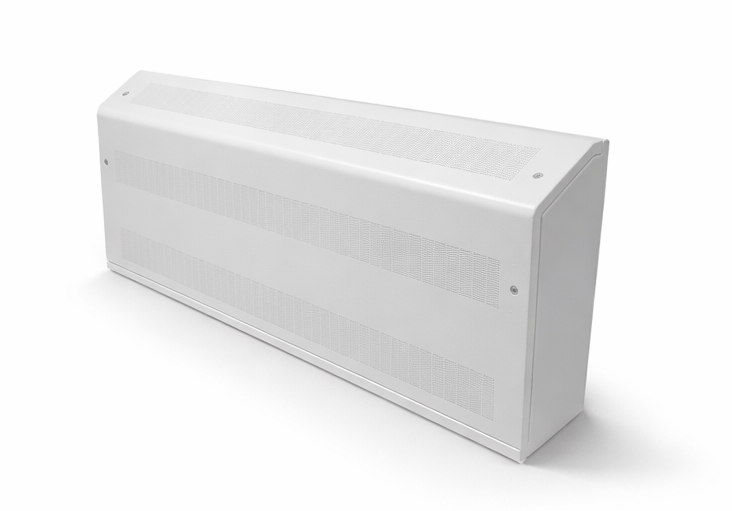
10/03/2026
Radiator Covers: A Specifier’s Checklist
Use this radiator covers checklist for tender notes: confirm dimensions, airflow, valves, cleaning, material, fixings and maintenance or secure access.
Read more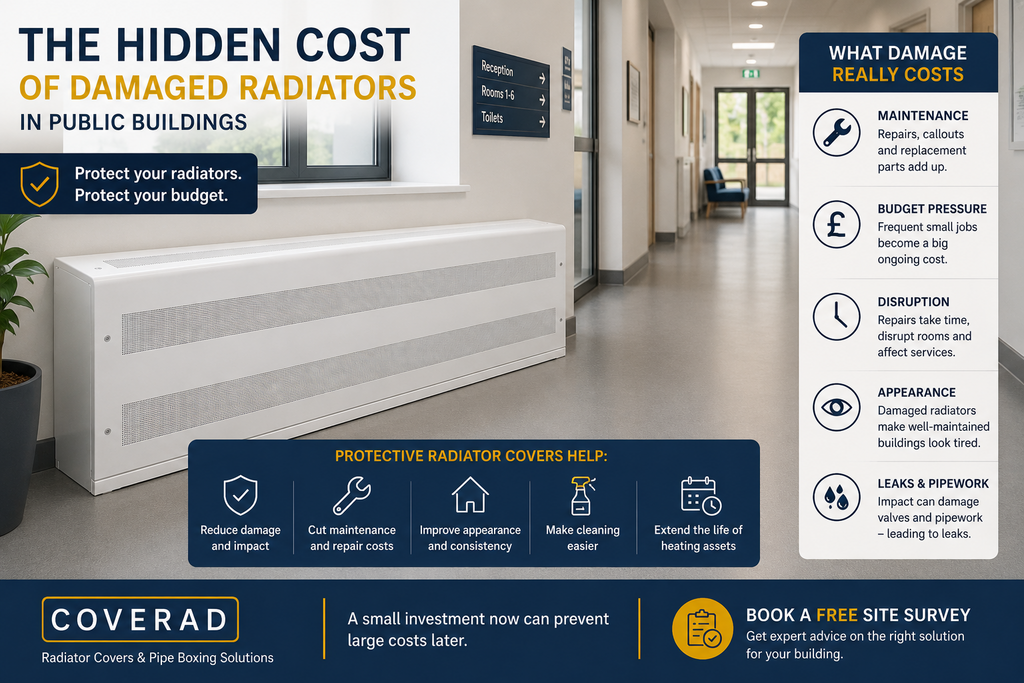
28/07/2026
The Hidden Cost of Damaged Radiators in Public Buildings
Damaged radiators can mean repairs, downtime and valve problems. See how protective covers and careful access planning help busy public buildings.
Read moreFrequently asked questions
What specification teams usually ask.
Practical checks to make before the current datasheet, drawings and project requirements are confirmed.
Why specify Polymer instead of steel?
Polymer is useful where moisture resistance, rust-free performance or a softer impact surface is important.
Can Polymer covers be wall mounted?
Floor- and wall-mounted configurations are available, subject to the project conditions.
What ventilation and access details should be agreed?
Review slotted or 2 mm perforation options alongside airflow, valve positions, cleaning access and the heating system requirements.
Which top profiles are available?
Flat and 30° sloping tops can be discussed alongside the mounting and site dimensions.